

The Stage Was Set in Gold and Debt
When the guns of August 1914 roared across Europe, it was not merely a political crisis that burst into flame. It was a financial explosion long in the making. Behind the flags, the armies, and the slogans of patriotism stood the accumulated weight of decades of unscriptural economic practices—interest-laden borrowing, dishonest weights in currency, limitless taxation, and governments hopelessly entangled in debts they could never repay.
By the eve of the First World War, both Germany and the Austro-Hungarian Empire were nearing financial collapse. Years of reckless borrowing and excessive military expansion had created a system that was running on paper promises rather than gold. When the assassination of Archduke Franz Ferdinand gave politicians the pretext they needed, the war that followed was less about a single gunshot in Sarajevo and more about the collapse of a fraudulent financial order.
Germany: The Industrial Powerhouse on Borrowed Time
The newly unified German Empire had risen swiftly since 1871. Its factories, shipyards, and railways transformed Europe. Yet the very speed of that industrial miracle rested on massive public and private borrowing. By 1913, Berlin’s imperial budget was already running chronic deficits. The official Reichsfinanzministerium report for that year admitted that “the continually increasing use of Treasury bills may endanger liquidity if foreign payments demand gold.” In plain terms, Germany was spending far more than it could afford, propping up its empire and its navy with credit rather than coin.
By the summer of 1914, the German gold reserve had fallen to barely half the amount needed to cover its notes in circulation. Every new battleship and cannon built under the Tirpitz Naval Laws required more borrowing. One finance memorandum issued in March 1914 confessed, “The continual expansion of defense credits without a commensurate revenue base cannot be maintained beyond 1916 without radical fiscal reform.”
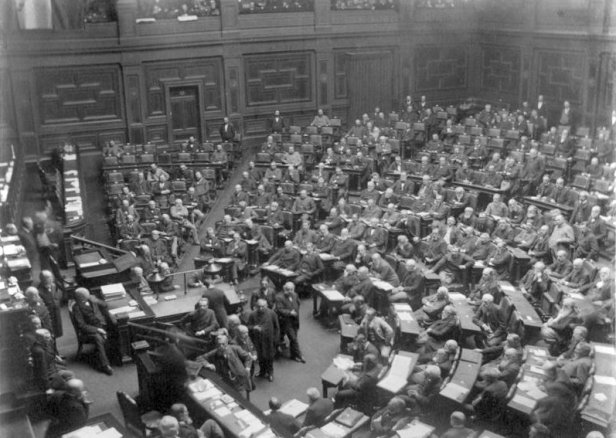
The meaning was clear: Germany could not keep its promises, nor fund its military buildup, without either massive new taxes or seizing new sources of wealth. But the Reichstag refused to raise taxes. The only other way to finance an empire that had outgrown its purse was war—a desperate gamble to capture resources before the creditors came calling.
Austria-Hungary: The Dual Monarchy on the Brink
If Germany was strained, Austria-Hungary was broke. The Dual Monarchy’s complicated political structure required both halves of the empire—Austrian and Hungarian parliaments—to approve each military budget. Each delay forced the Finance Ministry to issue short-term Treasury notes underwritten by private banks like Creditanstalt and Länderbank. These rolling loans became a financial treadmill that could never stop.
By 1913, interest payments consumed a quarter of the entire Austrian budget. Defense expenditures had climbed by 65 percent in only six years. Then-Finance Minister Leon Biliński warned his superiors on July 2, 1914:
“The Treasury cannot endure another half-year of drift. Only decisive action will rally the markets and Parliament alike.”
He was not referring to diplomacy. He meant that without “decisive action,” the empire would default. Within weeks, “decisive action” became the mobilization of millions of men.
The Gold Standard Cracks
Both empires were bound by the gold standard, a system that required every paper mark or krone to be redeemable in gold. It was meant to guarantee stability, but by 1914 it had become a straitjacket. Trade imbalances and military spending drained gold from the central banks faster than it could be replaced. When officials warned that “foreign payments demand gold,” they were admitting that foreign creditors—British, Dutch, and Swiss banks—were cashing in German and Austrian paper for bullion.
Unable to redeem every note, both governments quietly over-issued paper marks and krone. The Reichsbank and the Austro-Hungarian Bank printed notes far beyond their gold reserves. They were, in effect, counterfeiting against their own laws. Yet this monetary deceit was politically easier than cutting spending or raising taxes.
War as a Financial Escape
By mid-1914, the financial fuse was burning. The German and Austrian cabinets knew that a few more months of “peace” would mean financial collapse. War, on the other hand, promised a moratorium on debts, the suspension of gold payments, and the opportunity to loot reparations from defeated enemies. When Archduke Franz Ferdinand was assassinated in Sarajevo on June 28, 1914, it provided the perfect excuse—not the cause—for war.
Within days of the declarations, both empires suspended gold redemption, declared emergency paper currencies, and converted their precarious “floating debt” into long-term war loans. As the Austrian Treasury put it, “Through the issue of war loans, the floating debt will be consolidated and the Treasury freed from the constant necessity of short renewals which the banks can no longer afford.” War, in short, became a substitute for bankruptcy.
The bullets of Sarajevo did not ignite Europe’s destruction by themselves; they merely triggered an explosion of economic sin decades in the making.
How God’s Financial Laws Would Have Prevented It
The Torah provides a divinely inspired economic system designed to prevent exactly this sort of catastrophic chain reaction. Every financial crisis in history—from Rome’s debasement to the Great Depression—can be traced to violating the principles God gave Israel on Mount Sinai. Had Europe obeyed those laws, World War I would never have happened.
1. No Interest, No Usury, No Banking
God’s Word is explicit:
“You shall not lend for interest to your brother, interest of silver, interest of food, interest of anything that is loaned on interest.” — Deuteronomy 23:19
“You shall take no interest from him, or additional profit; but you shall fear your God.” — Leviticus 25:36
Banking empires live off interest—charging profit on borrowed money. This was the very mechanism that enslaved European nations before 1914. Governments borrowed for armaments, paying interest with new loans, compounding debt until the system imploded. The psalmist contrasts such practices with righteousness:
“He who has not put out his money at usury, nor has taken a bribe against the innocent; he who does these things shall never be moved.” — Psalm 15:5
Had the nations of Europe obeyed this single commandment, no empire could have built an army on borrowed money, nor enslaved future generations to pay for it.
2. Mandatory Bankruptcy Every Seven Years
God instituted a financial reset every seventh year:
“At the end of every seven years you shall grant a release of debts. And this is the form of the release: every creditor who has lent anything to his neighbor shall release it.” — Deuteronomy 15:1–2
In that seventh year, the slate was wiped clean. No lifetime indebtedness, no perpetual bondage. This principle would have prevented the endless roll-over borrowing that trapped both Germany and Austria-Hungary. In God’s economy, there are no “floating debts” choking an empire—only limited-term obligations tied to real assets.
Debt release was not only an act of mercy but an economic safety valve. Instead of catastrophic crashes, there would be periodic, predictable corrections. The Bible even anticipates the temptation to withhold help as the year of release draws near:
“Beware lest there be a wicked thought in your heart, saying, ‘The seventh year, the year of release, is at hand,’ and your eye be evil against your poor brother.” — Deuteronomy 15:9
Modern finance thrives on perpetual interest and avoidance of accountability. God’s system abolishes both.
3. The Jubilee: National Bankruptcy by Command of God
Every fiftieth year, a great trumpet sounded on the Day of Atonement declaring complete restoration:
“You shall consecrate the fiftieth year, and proclaim liberty throughout all the land to all its inhabitants. It shall be a Jubilee for you; and each of you shall return to his possession, and each of you shall return to his family.” — Leviticus 25:10
All property returned to its original family; all debts were erased; all slaves set free. The Jubilee was God’s permanent safeguard against generational debt and economic oligarchy. Had Europe obeyed it, no single class of financiers could have accumulated such power, nor could governments mortgage their nations into war.
By 1914, both empires were functionally slaves to their creditors. The Jubilee would have torn up the mortgage and restored liberty.
4. Honest Weights, Honest Money
Biblical law also forbids tampering with the value of currency:
“You shall have just balances, just weights, a just ephah, and a just hin.” — Leviticus 19:36
“You shall not have in your bag differing weights, a heavy and a light.” — Deuteronomy 25:13
The shekel was to be “according to the shekel of the sanctuary” (Leviticus 27:25)—a public, verifiable standard kept at the Temple so no ruler could secretly debase the currency.
But by 1913, both Germany and Austria-Hungary were printing notes unbacked by gold. Their “differing weights” were paper promises without substance—fiat currency in violation of God’s command. When they suspended gold payments in 1914, they officially abandoned honest money. The Bible calls such deceit an abomination:
“For all who do such things, all who are dishonest, are an abomination to the Lord your God.” — Deuteronomy 25:16
If the nations had maintained honest weights and refused to print value out of thin air, their economies would have remained stable, and the temptation to solve insolvency through conquest would never have arisen.
5. Limited and Just Taxation
In Scripture, God allowed a single tithe on agricultural increase—about ten percent of the land’s produce.
“All the tithe of the land, whether of the seed of the land or of the fruit of the tree, is the Lord’s; it is holy to the Lord.” — Leviticus 27:30
Modern states, however, built tax systems so layered that by the early 1900s the working man in Europe faced property taxes, excise taxes, trade duties, and income taxes—all to pay interest on national debts. Excessive taxation to service unbiblical loans impoverished the population and fueled resentment that made war popular.
God’s economy, in contrast, limits taxation to limit the government. Real biblical economic growth can be slower but it is sustainable.
The Moral of the War
When the leaders of Europe rejected God’s economic commandments, they unleashed forces of debt, greed, and deceit that consumed an entire generation. The violation of divine law did not only break spiritual covenants; it destroyed the very mechanisms that sustain peace. Debt became bondage, and bondage demanded blood to pay its interest.
Germany and Austria-Hungary were not alone. Britain, France, and Russia carried their own mountains of debt. But the Axis powers were the most desperate, the most over-leveraged, and the first to gamble on war as a financial solution. Had they practiced the Torah’s system—no usury, periodic debt release, honest currency, and limited taxation—their treasuries would have been sound, their people prosperous, and their rulers restrained.
Instead, the world’s richest continent was plunged into poverty and ruin. Over sixteen million lives were lost because men ignored the eternal economic wisdom of their Creator.
The Wisdom of God’s Economy
The Torah’s financial laws are not archaic or ceremonial. They are the foundation of sustainable civilization. Every provision—every seven-year release, every Jubilee, every honest weight—exists to prevent concentration of wealth, exploitation of the poor, and the delusion that prosperity can be printed or borrowed into existence.
God’s system demands faith and restraint: lend to your brother, but not for profit; release debts when the time comes; measure with fairness; tax with moderation; and remember that all wealth ultimately belongs to Him. When nations obey those principles, they enjoy peace. When they break them, they reap war.
World War I stands as the ultimate warning. The trenches of Europe were dug not only by shovels but by pens—pens that signed bonds, loans, and banknotes in violation of God’s Word. As the prophet Jeremiah lamented:
“They have healed the wound of my people lightly, saying, ‘Peace, peace,’ when there is no peace.” — Jeremiah 6:14
There can be no lasting peace built on dishonest money, perpetual debt, and economic oppression. True peace begins with repentance and a return to God’s financial laws.
If Germany and Austria-Hungary had obeyed the Torah’s plain commandments—refusing usury, observing the seven-year release, honoring the Jubilee, maintaining honest weights of gold and silver, and limiting taxation—the financial panic of 1914 would never have existed. Their treasuries would have been solvent, their people free, and the blood of millions would never have stained the soil of Europe.
As it was, men ignored God’s statutes, and the inevitable judgment followed. But the lesson remains for our own generation: nations that build their economies on debt and deceit are sowing the same whirlwind. Those who return to the laws of the Almighty will find what Europe lost—a world governed not by greed and war, but by righteousness, mercy, and peace.
 My Hebrew Roots