
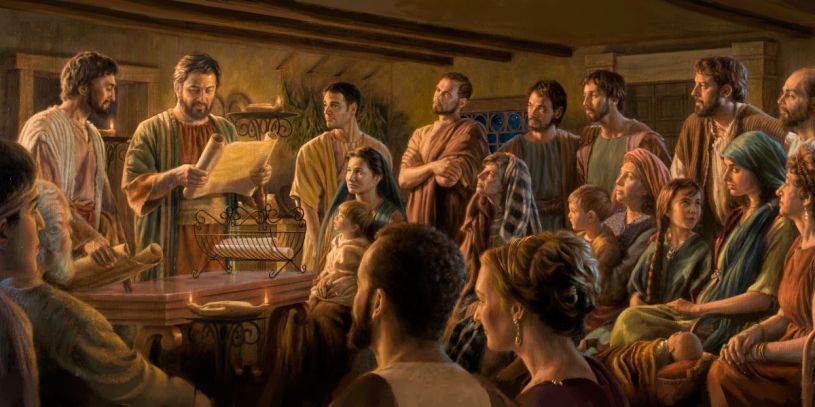
It has been estimated that there are over 40,000 Christian denominations in the world with practices and customs very different from one another. Some rely heavily upon ceremonies, ventures, symbolism, the reciting of “special” prayers and chants. While other Christian denominations have a service that is very simple: a few hymns, a sermon and a couple prayers. Some rely heavily upon doctrinal teachings while others focus more on a positive- feel good message about Christ. The bottom line is that there is A LOT of diversity in Christianity today. We are not united.
So what did the original first century church look like? What doctrines did they teach? What day did they worship on? What holidays did they keep?
These are very important questions to ask because Christ predicted there were going to be many different teachings. And despite what some may teach there aren’t many paths that lead to salvation.
“Enter in through the narrow gate; for wide is the gate and broad is the way that leads to destruction, and many are those who enter through it; For narrow the gate and difficult is the way that leads to life, and few are those who find it.”
Mat 7:13-14 AFV.
Christ goes on to say a couple verses later:
“Not everyone who says to Me, ‘Lord, Lord,’ shall enter into the kingdom of heaven; but the one who is doing the will of My Father, Who is in heaven. Many will say to Me in that day, ‘Lord, Lord, did we not prophesy through Your name? And did we not cast out demons through Your name? And did we not perform many works of power through Your name?’ And then I will confess to them, ‘I never knew you. Depart from Me, you who work lawlessness.‘“
Mat 7:21-23 AFV.
It is clear from this passage that simply claiming to be a Christian and calling upon the name of Christ isn’t enough. We have to ask ourselves: What is the will of the Father? What is lawlessness? And what did original Christianity look like?
Renown historian Edward Gibbon gives us a glimpse into original Christianity in his masterpiece “The History of the Decline and Fall of the Roman Empire”.
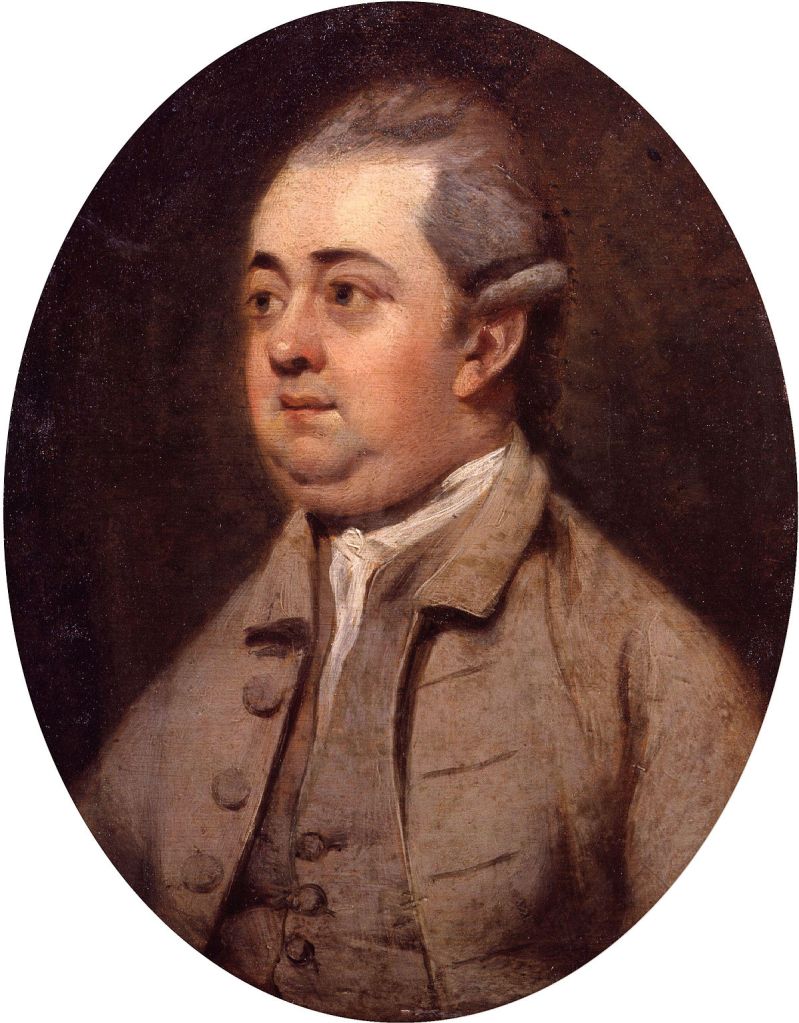
“The first fifteen bishops of Jerusalem were all circumcised Jews; and the congregation over which they presided united the law of Moses with the doctrine of Christ.
Edward Gibbon: The Decline and Fall of the Roman Empire, chap. 15, sec. 1, p. 353
The Church that Jesus built did not begin as a Romanized church that simply “Christianized” antient pagan practices and abandoned God’s law. As many historians have noted, originally the religion of Christ and the Apostles was a Jewish faith that was in harmony with the Old Testament.
And Dr. William Davies confirms this in his book “Paul and Jewish Christianity”.
“Everywhere, especially in the East of the Roman Empire, there would be Jewish Christians whose outward way of life would not be markedly different from that of the Jews. They took for granted that the gospel was continuous with [the religion of Moses]; for them the New Covenant, which Jesus had set up at the Last Supper with His disciples… did not mean that the covenant made between God and Israel was no longer in force. They still observed the feasts of Passover, Pentecost and Tabernacles; they also continued to be circumcised, to keep the weekly Sabbath and the Mosaic regulations concerning food. According to some scholars, they must have been so strong that right up to the fall of Jerusalem in ad 70 they were the dominant element in the Christian movement” (Judeo-christianisme, “Paul and Jewish Christianity,” Davies, 1972)
After the fall of Jerusalem, antisemitism was on the rise and Roman “Christianity” strove to remove all things Hebrew from the religion of Christ. But this was not how Christianity began as historian Jesse Lynan Hurlbut explains in “The Story of the Christian Church”.
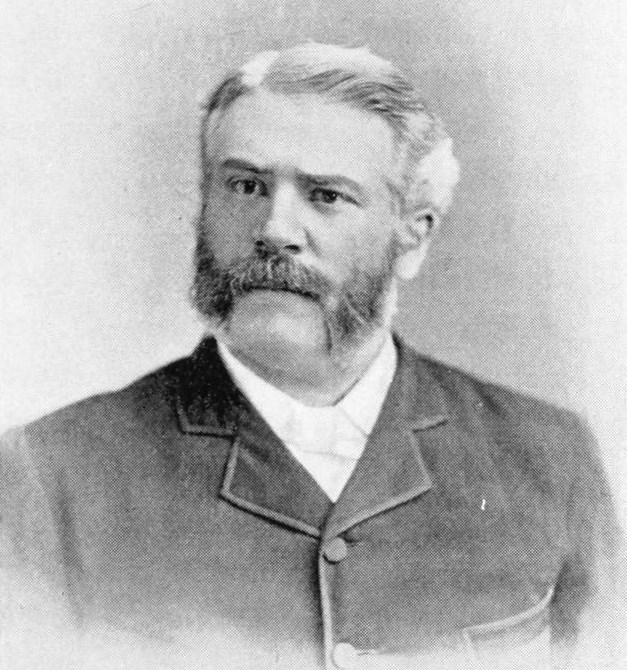
“Fifty years after St. Paul’s life a curtain hangs over the church, through which we strive vainly to look; and when at last it rises, about 120 A.D. with the writings of the earliest church-fathers, we find a church in many aspects very different from that in the days of St. Peter and St. Paul”
Hurlbut: Story of the Christian Church, p. 41.
And so this transformation takes place. We start out with Christianity that united the Law of Moses with the Doctrines of Christ, governed under the direct inspection of the Apostle’s and the writers of the New Testament. And then after their death, we see a new Christianity arising in the second century, very different. And by the time we get to the Council of Nicea in 325 AD, we see a completely Romanized Church.
Historian Paul Johnson describes this unholy alliance between the paganism of the Roman religion and Romanized “chrsitianity”.

The Romans “held their services on Sunday, knelt towards the East and had their nativity-feast on 25 December, the birthday of the sun at the winter solstice. During the later pagan revival under the Emperor Julian, many Christians found it easy to apostatize because of this confusion; the Bishop of Troy told Julian he had always prayed secretly to the sun. Constantine never abandoned sun-worship and kept the sun on his coins. He made Sunday into a day of rest”
Paul Johnson, A History of Christianity, pp. 67–69.
Pulizer prize winning authors Will and Ariel Durant confirms this as well in their classic historical series The Story of Civilization:
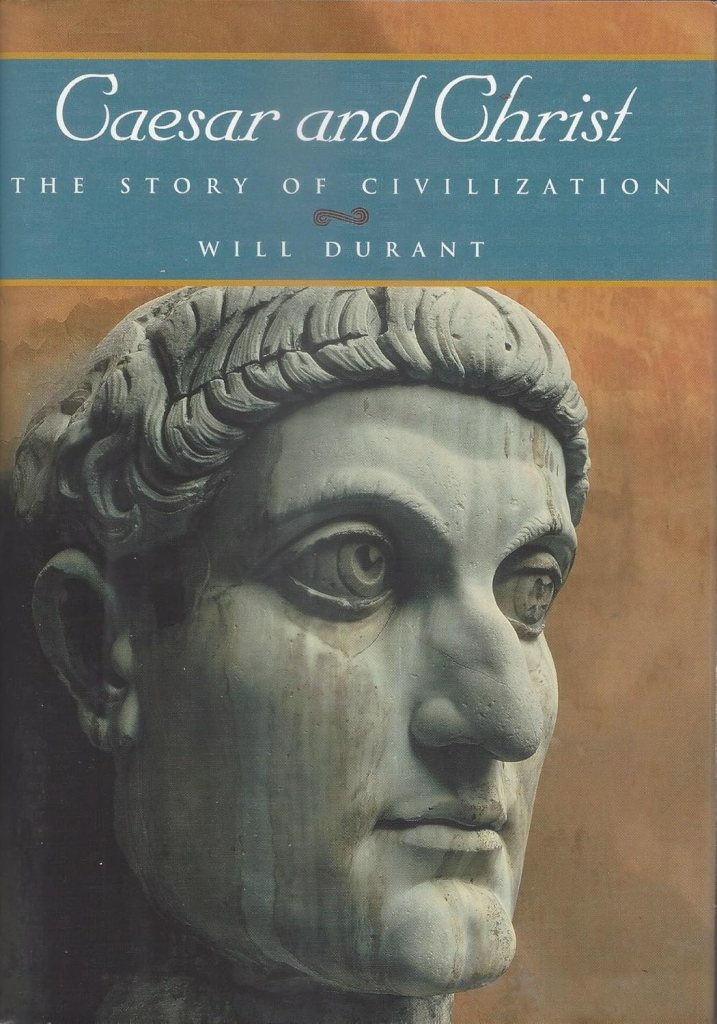
Christianity did not destroy paganism; it adopted it. The Greek mind, dying, came to a transmigrated life in the theology and liturgy of the Church; Other pagan cultures contributed to the syncretist result. From Egypt came he ideas of a divine trinity… and a personal immortality of reward and punishment; from Egypt the adoration of the Mother and Child….Christianity became the last and greatest of the mystery religions
The Story of Civilization, Vol.5, Durant, pp. 595, 599
And when Constantine on 321 AD, made Sunday into the official day of rest for the Empire, he didn’t do it in the name of Christ, he did it in the name of the Sun god.
“On the venerable day of the Sun let the Magistrates and the people residing in the cities rest, and let all workshops be closed.”
Edict of Emperor Constantine 321 AD

This Law was put in place to honor and venerate the Sun god and had nothing to do with Christianity.
Believe it or not, the Apostles predicted that many would depart from original Christianity when this paganism of Christianity took place and warned faithful Christians not to follow it when it happened. Paul gives a very pointed warning in the book of Acts.
For I know this: that after my departure grievous wolves will come in among you, not sparing the flock; And from among your own selves men will rise up speaking perverse things to draw away disciples after themselves. Watch, therefore, remembering that for three years I ceased not to admonish each one night and day with tears.
Act 20:29-31 AFV.
With tears Paul pleaded with the brethren not to be deceived by this paganizing of the truth that was to take place after his death. And as we know from history, it DID take place exactly as he foretold.
Jude gives the exact same warning:
Beloved, when personally exerting all my diligence to write to you concerning the common salvation, I was compelled to write to you, exhorting you to fervently fight for the faith, which once for all time has been delivered to the saints. For certain men have stealthily crept in, those who long ago have been written about, condemning them to this judgment. They are ungodly men, who are perverting the grace of our God, turning it into licentiousness, and are personally denying the only Lord God and our Lord Jesus Christ.
Jud 1:3-4 AFV.
Jude’s prophetic warning of this Romanizing of Christianity has two important points. First he brings out that the faith was once and for all deliver unto the saints- meaning we don’t have to wait for “new truth” to be “revealed” in the future. Second he explains HOW they will do it. By turning the doctrine of grace into a license to sin- which we still see to this day.
Peter gives this same prophetic warring as well.
But there were also false prophets among the people, as indeed there will be false teachers among you, who will stealthily introduce destructive heresies, personally denying the Lord who bought them, and bringing swift destruction upon themselves.
2Pe 2:1 AFV.
And there are multiple other passages given by the Apostles, warning the first century Church of this coming departure from the “faith which was once for all delivered to the saints”.
- II Tim 3:13
- Galatians 1:6-9
- II Tim 4:3-4
- II Cor 11:3-4
- II Cor 11:12-15
- Mat 7:13-15
But these warnings apply just as much to you as it does to those in the first Century. Is your Christian faith based upon original Christianity that “united the law of Moses with the doctrine of Christ“? Are your beliefs the same as the Apostles who according to Davies: “still observed the feasts of Passover, Pentecost and Tabernacles; they also continued to be circumcised, to keep the weekly Sabbath and the Mosaic regulations concerning food“? Or do you have a Christian faith that is “very different from that in the days of St. Peter and St. Paul” ? A Roman Faith that “venerates” the day of the Sun?
To learn more about Original Christianity and Hebrew Roots, watch my video on “What is Hebrew Roots?”.
 My Hebrew Roots