

A very common and dishonest tactic used by politicians and journalists to combat information that can’t be ignored is spin. Spin or spin tactic is where information that would logically be viewed as bad is “spun” around and presented as good. Or conversely, good information is “spun” with clever word usage and is presented as bad. Terms like “murder of the unborn” is spun around to now be referred to as “reproductive freedom”. Recently the ACLU fought a legal battle at a High School in Chesapeake Virginia to allow Satanist after school program for students. This was touted by the Hill Magazine as being a “victory for free speech and religious liberty”. Once again, something that would be considered appalling, with the right spin tactics can be viewed as positive.
Years ago, I was listening to a critical lecture online where the professor was discussing the subject of the Noachian flood. She admitted that almost every ancient civilization in the Mesopotamian region had a flood story that was very similar to Genesis. But then she quickly informed the class that this only proves that Moses didn’t receive this information from God, he simply “modified” a story from all the people around him. Here we have archaeological evidence that would appear to be positive support of the Bible, which is now “spun” to actually be bad.
Isaiah the prophet condemns these spin tactics in 5:20 saying: “Woe to those who call evil good and good evil; who put darkness for light and light for darkness; who put bitter for sweet and sweet for bitter!” (AFV).
The typical hallmarks of spin are as such: When information arises that can’t be ignored or refuted, a completely opposite interpretation is given (no matter how convoluted), while the traditional or logical interpretation is never mentioned as though none exists. The Yale professor never mentions to her class an alternate theory that if all of the civilizations in Mesopotamia witnessed the same flood event, there is a possibility that it might have happened!
One of the most glaring examples of spin, in my opinion, is the Documentary Hypothesis or DH. Although DH itself has changed slightly over the years, it is an explanation supported by almost all critical Bible scholars proposing that the writings of Moses (Torah or Pentateuch) wasn’t written by Moses, but was compiled in the 5th century using a collection of documents pieced together. All of these documents and/or sources according to DH, evolved over the centuries as the oral stories changed and were later edited. The final conclusion of DH is that the Torah, which is the foundation of the Bible, is no more than campfire stories collected over the years, edited and changed at random intervals and then compiled 1000 years after the fact. DH claims that Moses most likely never existed and his biography is no more accurate than a game of telephone played by a kindergarten class.
Julius Wellhausen, who is credited for formulating DH in 1883 states:
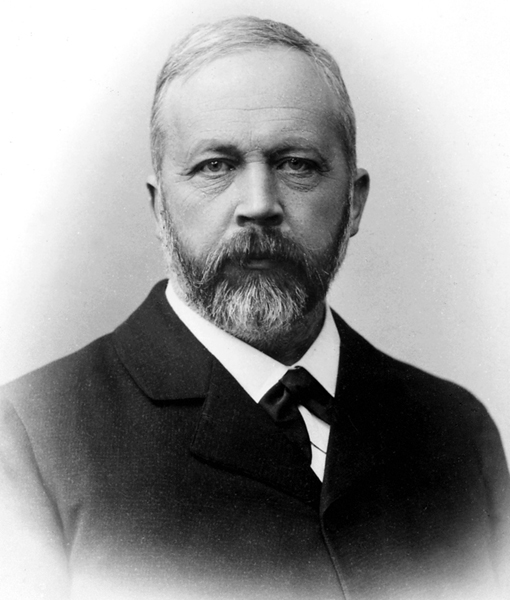
“We cannot gain any historical knowledge of the Patriarchs, but only about the time when the narratives were written in Israel. The period with all of its deep and superficial characteristics has been unconsciously projected back where it is reflected as a transfigured ghost.”
Wellhausen, Julius. “Die Composition des Hexateuchs und der historischen Bücher des Alten Testaments”Berlin, G. Reimer,1899
Wellhausen’s theory comes from several pieces of data. First, there is no proof that Hebrew writing on parchment existed as far back as the 2nd Millennia B.C. (the time of Abraham), let alone to Noah or Enoch. Second, there are examples of considerable editing that had taken place in the Pentateuch. Third, there are considerable differences as to how God is referred to: YHWH, Elohim or Adoniah.
However, like most spin doctors, Wellhausen and the proponents of DH are leaving out one critical piece of information: The traditional Biblical explanation of the formation of the Torah has always been fully aware of these facts and this explanation doesn’t conflict with those facts. There were multiple authors with different writing styles. There were edits, additions, and revisions. Documents that Moses had for compiling Genesis most likely weren’t written in Hebrew (archaeology later showed it was cuneiform). God has revealed himself with different titles and names to different people. The difference with the traditional view is that this process of the formation of the Pentateuch was done in an orderly fashion under the direct supervision of God and the Torah is extremely accurate as a historical document.
As archaeological evidence is unearthed and cuneiform tablets are deciphered, the historical accuracy of the Bible continues to be verified. Upwards of 2 million cuneiform tablets have been unearthed in the near east and the more we know about these civilizations, the more the Bible is verified.

John Bright in his book “History of Israel” on page 76 states the following regarding the biblical account of Abraham and the Patriarchs:
“when the traditions are examined in the light of the archaeological evidence, the first assertion to be made is that the stories of the Patriarchs fit unquestionably and authentically in the middle of the second century BC and not in any later period. “
Renown archeologist WF Albright confirms this with the following:
The narratives of Genesis dealing with Abram may now be integrated into the life and history of the time in such surprisingly consistent ways that there can be little doubt about their substantial historicity.
Sarna, Nahum M. “Abraham in History” Biblical Archaeology Review, Volume 3, No 4. Dec 1977
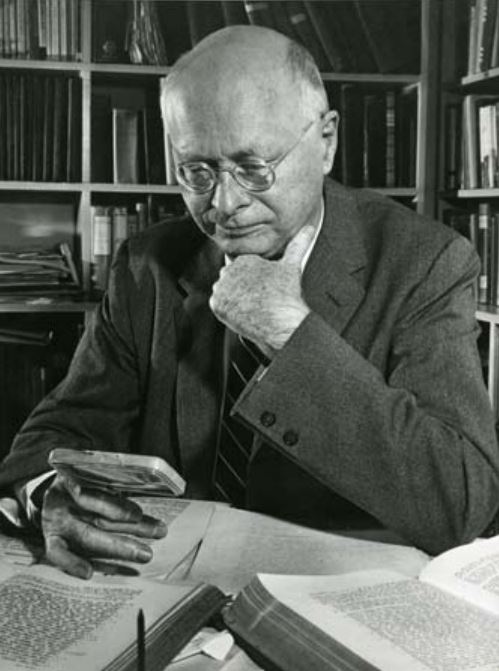
This level of historical accuracy can not be preserved by the reciting of Israelite campfire stories or through a game of Hebrew telephone as Wellhausen believes. The author of the Torah was an eyewitness to the events of the Exodus and had very accurate documents that he used to compile Genesis.
In order to understand how the Pentateuch or any book of the Bible was canonized, we need to understand the role of a prophet. In 1 Samuel 8:5, the elders of Israel demand to Samuel that they receive a “king to judge us like all the nations” (AFV). In verses 7 and 9 “The LORD said to Samuel…‘they have not rejected you, but they have rejected Me….now hearken to their voice. Only, you shall surely protest solemnly to them, and show them the kind of king who shall reign over them’” (AFV emphasis added). In the following verses 8-18 Samuel recites all of the curses that accompany a king and then finishes by stating “LORD will not answer you in that day” (1 Samuel 8:18 AFV). But the people refused to obey the voice of Samuel. And they said, “No, but we will have a king over us” (19 AFV).
Notice that the people refused to listen to Samuel and in reality, were rejecting the rulership of God through His prophet. So, in 1 Samuel 10:25 we have an account of Samuel making an addition to the Pentateuch: “Then Samuel explained to the people the behavior of royalty, and wrote it in a book and laid it up before the Lord.”
The actual addition is located in Deuteronomy 17:14-20 where the behavior of royalty is listed. It begins by stating: “When you come to the land which the Lord your God is giving you, and possess it and dwell in it, and say, ‘I will set a king over me like all the nations that are around me.’”
This scenario is exactly what happened in 1 Samuel 8. If this was an option for the elders to have a king at any time, they would have quoted it and no one would have felt rejected. That obviously is not the case. Deuteronomy 17:14-20 was an addition added by Samuel and was then added to the canon of scripture by God’s instruction through the process when he “laid it up before the LORD” (1 Samuel 10:25).
This is the same process described in Deuteronomy 31:24 & 26 when Moses “completed writing the words of this law in a book” and then told the Levites to “take this Book of the Law, and put it beside the ark of the covenant…as a witness against you.” A prophet, under the direction of God, has the authority to compile, edit or add to the canon of scripture and then lay it up before the Lord—meaning to give it to the Levites for preservation.
There are numerous edits and updates made by the prophets to the Pentateuch that were by no means hidden. Judges 8:30 refers to sons of Jonathan being priests in Dan up to the day of the Babylonian captivity—an 800-year span. Genesis 14:14 describes that Abraham pursued the four kings with Chedorlaomer unto the territory of Dan. Dan had not been born, and the territory of Israel had not been divided up until 500 years later. Genesis 2:13-14 gives descriptions of the rivers Gihon and Tigris. These descriptions and updated names were not contemporary to the time of creation but the time of Moses. Deuteronomy 34:6 states that no man knows of the location of the grave of Moses to this day. Obviously, it is not referring to the same day that he died. Deuteronomy 34:10 states that there has not been a prophet like Moses since then in Israel. This observation is not referring to the 15 minutes since he died. Genesis 36:31–39 records the names of Edomite kings down to the time of King Saul—an 850-year span. It is very clear from these and multiple other passages that the Hebrew scriptures have never hidden the fact that it has been updated and edited over time. The Holy Prophets under the direction of God had the authority to make these edits to the scripture.
First and Second Chronicles have always been attributed to Ezra the priest. In these two books there are 7 other documents he refers to including Samuel and Kings: “the book of Nathan the prophet” (1 Chronicles 29:29), “the book of Gad the seer” (1 Chronicles 29:29), “the prophecy of Ahijah the Shilonite” (2 Chronicles 9:29), “the visions of Iddo the seer” (2 Chronicles 9:29) “the book of Shemaiah the prophet” (2 Chronicles 12:15), “the book of Jehu the son of Hanani” (2 Chronicles 20:34), “the sayings of Hozai” (2 Chronicles 33:19). When Ezra wrote Chronicles, he did not rely on campfire stories or legends he heard at the local tavern as critical scholars would have you believe. He used the above documents to compile it and he quotes his sources as any reputable author would.

Moses did the same when he compiled Genesis and he quotes his sources as well. There are 8 documents Moses refers to in Genesis: “The book of the origins(or histories) of the heavens and the earth” (Genesis 2:4), “The book of the origins of Adam” (Genesis 5:2), “The origins of Noah”(Genesis 6:9a), “The Origins of the Sons of Noah”(Genesis 10:1), “The origins of Shem”(Genesis 11:10a), “The origins of Terah (Genesis 11:27a), “The origins of Ishmael and Isaac”(Genesis 25:19a), “The origins of Esau and Jacob”(Genesis 37:2a). Note: In cuneiform the title is given at the end of the tablet, not at the beginning.
Wiseman P.J. “Structure of Genesis”, Thomas Nelson, Nashville, 1985
Every Bible scholar has the latitude to propose their own ideas and voice their opinion about how the Bible was canonized. But when deceptive tactics are employed to push theories that are highly dishonest, we can only guess their motivation: to discredit the authority of scripture. The scripture does not hide how it came into being. It quite often lists the authors of the different sections. Nowhere in scripture did it say these documents had to be originally written in Hebrew. Nowhere in scripture does it state Moses composed Genesis from memory. Nowhere in scripture does it state it can’t be edited by a prophet. The Documentary Hypothesis is founded by arguing against positions no traditional scholar has taken, and uses spin tactics to confuse the facts. The Holy Scriptures, founded on the Torah, have been preserved faithfully for almost 6000 years and we can rest assured it is the word of God.
 My Hebrew Roots